
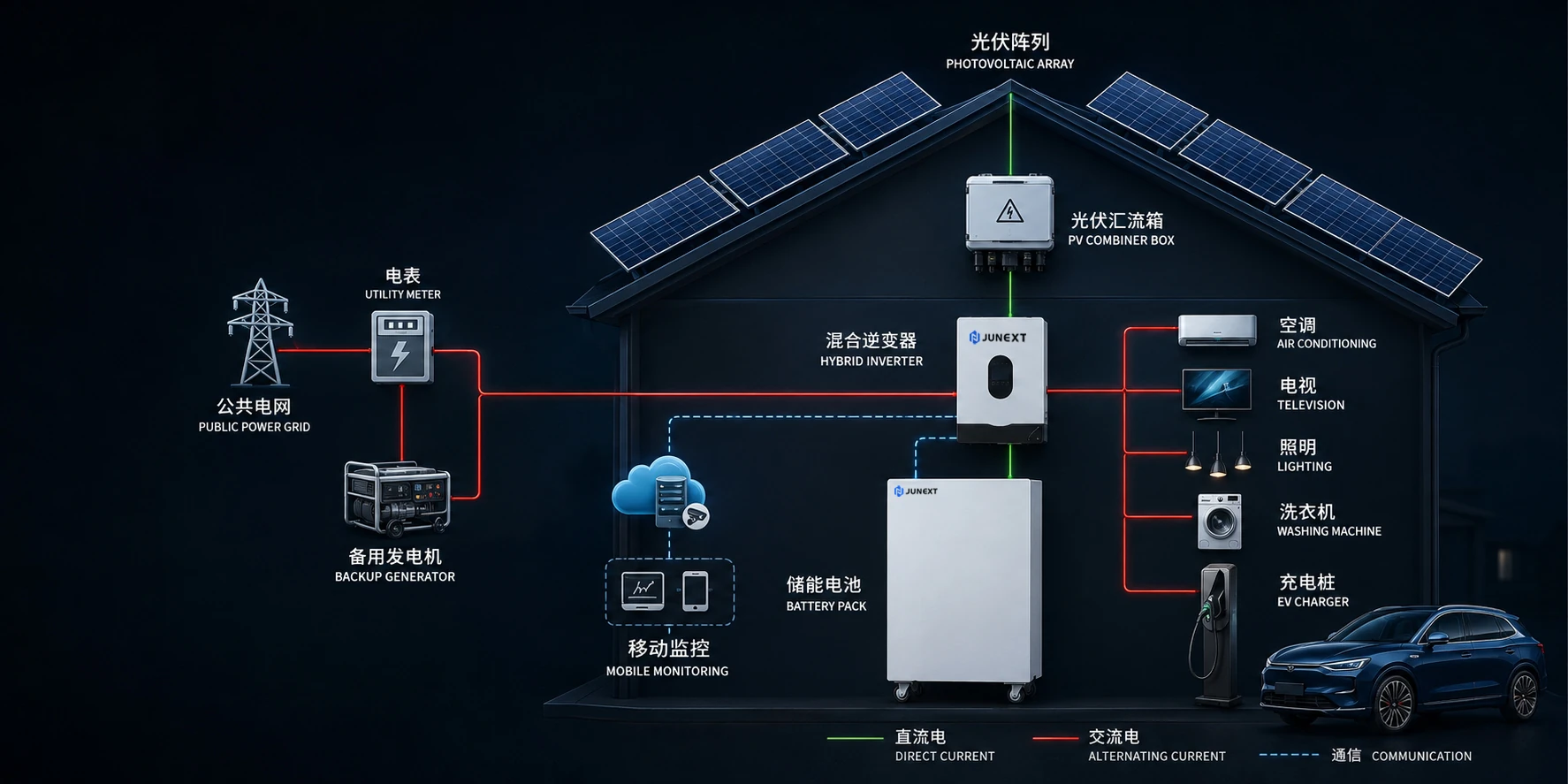
Residential system direction
Off-grid resilience without oversized guesses.
Balance daily consumption, solar recovery, reserve days and generator support before hardware selection.
Build this directionThe project question.
An off-grid system must recover after poor solar conditions as well as power the site during a normal day. Battery energy, PV recovery and controllable loads therefore need to be reviewed together.
A first-pass off-grid architecture with explicit energy balance, reserve assumptions, charging sources and load-management boundaries.
A four-step design sequence.
Each step narrows the next decision and keeps the assumptions visible for installer and technical review.
- 01
Build a daily energy budget
Estimate watt-hours for every required load and separate flexible loads from non-negotiable ones.
- 02
Allow for recovery
Size the solar and charging path to restore the battery while continuing to serve daytime loads.
- 03
Plan low-sun operation
Define reserve days, load-shedding priorities and whether generator support is available.
- 04
Confirm the site
Review temperature, ventilation, enclosure, access, cable routes and maintainability before release.
Harvest available daylight
Coordinate every source
Hold a visible reserve
Prioritise essential circuits
Inputs to bring.
- Daily load energy
- Peak and surge power
- Solar resource and array space
- Required reserve days
- Generator or secondary charging source
Checks before release.
- Daily energy balance
- PV recovery time
- Reserve and low-sun policy
- Charging-source coordination
- Environmental suitability
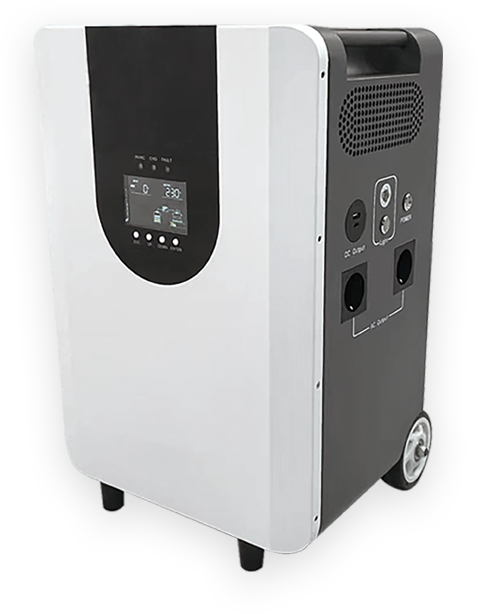
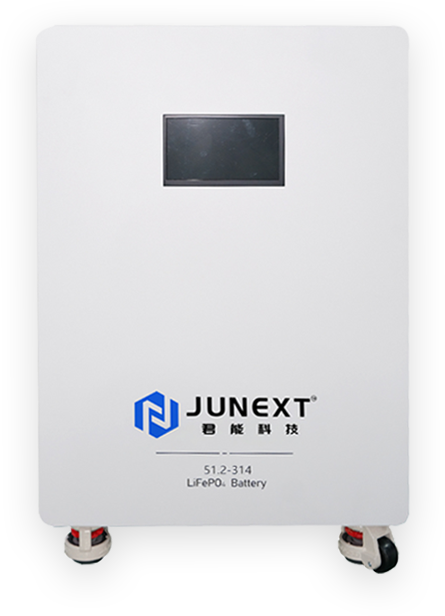
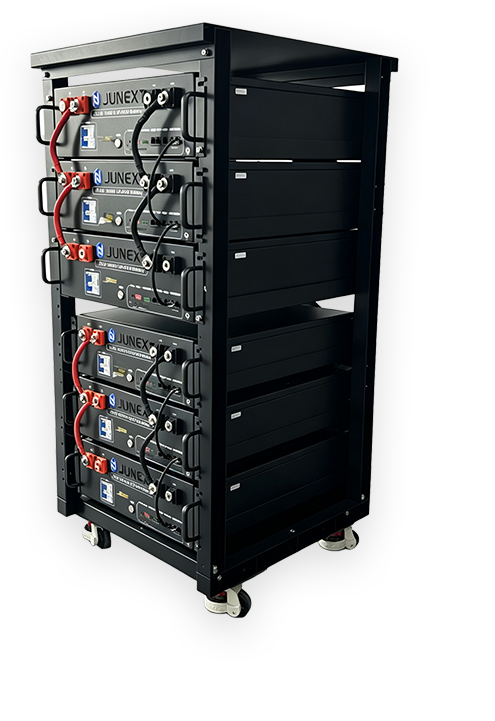
Relevant product directions.
These products provide a starting point, not an automatic compatibility approval. Confirm the exact model revision and system architecture.
Turn this direction into a project brief.
Send the destination market, load list, surge demand, target runtime, PV information and installation context for model-specific review.
Build a project brief